Key takeaway:
• Emergency tree service covers fallen trees, storm-split limbs, and hazardous leaning trees that threaten property or safety.
• NSW SES data shows fallen trees are one of the leading causes of storm-related call-outs each season.
• Safety sequencing matters: secure the area and check for electrical hazards before any tree work begins.
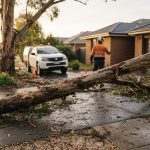
When a storm tears through the Central Coast and drops a limb across your driveway or splits a trunk near the house, the priority is a fast, safe response rather than guesswork with a chainsaw. An Emergency tree service Central Coast NSW assesses the hazard, stabilises or removes the dangerous material, and clears access so the property is safe again. This differs from routine tree maintenance because the work is reactive, time-critical, and often involves unpredictable structural tension in damaged timber.
Storms are a genuine risk factor on the Central Coast, not an occasional inconvenience. The NSW SES responded to more than 23,416 incidents last storm season, with roughly 7,000 related to fallen trees and more than 6,500 related to leaking and damaged roofs. That scale of incident volume explains why a dedicated emergency response, separate from scheduled tree care, matters for coastal properties exposed to wind and heavy rain.
What Counts as a Tree Emergency
Not every damaged tree needs an urgent call-out, but some situations cannot wait.
• A tree or large limb has fallen on a house, fence, car, or outbuilding
• Branches are tangled in powerlines or sparking
• A trunk has split partially but not separated
• A tree has developed a sudden lean after wind or saturated soil
• Fallen timber is blocking a driveway, road, or essential access point
If any of these apply, treat the site as unsafe until it has been properly assessed. According to NSW SES storm season guidance, residents are encouraged to check on neighbours and take preparedness steps ahead of severe weather, which also applies to recognising when a tree has become a genuine hazard rather than simple storm mess.
Immediate Safety Steps Before Help Arrives
The sequence you follow in the first few minutes affects both safety and insurance outcomes.
1. Keep people and pets well away from the fallen or leaning tree.
2. Treat any wire touching the tree as live and do not approach it.
3. Call 000 if anyone is injured, trapped, or in immediate danger.
4. Contact NSW SES on 132 500 if the tree is blocking access or still threatening the property.
5. Photograph the damage once it is safe to do so, for insurance records.
6. Avoid cutting, climbing, or pulling at the tree until a qualified operator has assessed it.
Storm-damaged timber can hold stored tension, meaning a limb that looks stable may shift once pressure is released. Waiting for a trained crew with the right rigging and equipment reduces the risk of a second incident on top of the first.
Comparing Response Options After a Storm
|
Situation |
Who to Contact First |
Why |
|
Life-threatening danger or live wires |
000 |
Immediate risk to life takes priority over property |
|
Tree blocking access or threatening the home |
NSW SES (132 500) |
Storm emergency response and make-safe support |
|
Fallen tree on private property, not life-threatening |
Local tree service |
Qualified removal, cutting, and cleanup |
|
Ongoing hazard assessment after the storm passes |
Arborist report |
Determines if remaining trees are now unstable |
This order reflects how storm response typically works across New South Wales: emergency services and SES manage the immediate make-safe situation, while a private tree service handles the practical removal, cleanup, and stump work that follows.
What a Local Response Service Typically Handles
Once the immediate danger has passed, a tree service usually manages the practical side of recovery. Tree Central, an Ourimbah-based operator, provides tree removal, stump grinding, pruning, land clearing, and arborist reports across the Central Coast region, alongside 24/7 emergency response for storm-related jobs. Verified service listings describe felling and tree removal, thinning and pruning, stump grinding, mulch sales, land clearing, qualified arborist reports and mulching or chipping. Directory information also confirms Tree Central provides 24 hours 7 days a week emergency service for any size job after severe storm damage, with experience handling storm damage situations.
For property owners, this means a single point of contact can handle both the urgent clean-up and any follow-up pruning or removal once the site is stable. Confirming insurance coverage and licensing before engaging any contractor remains a sensible precaution after a major storm event.
Frequently Asked Questions
Do I need council approval to remove a storm-damaged tree? Many trees on the Central Coast are protected under local council rules, particularly native species or those over a certain trunk diameter, so approval requirements can still apply even after storm damage.
How quickly can an emergency crew respond after a storm? Response times depend on the scale of the storm event and number of call-outs in the area, so contacting a provider directly for current availability is the most reliable way to get a timeframe.
Should I call SES or a tree service first? Call 000 for life-threatening danger, NSW SES for a tree blocking access or still threatening the property, and a private tree service once the immediate emergency has been controlled.
Is a leaning tree always dangerous? Not always, but a sudden lean after wind or saturated soil can indicate root or structural damage, so it should be assessed by a qualified operator before assuming it is stable.
Storm recovery on the Central Coast runs smoother when residents understand the right call order and recognise genuine hazards early. For local emergency tree response, you can view business details and reviews on the Tree Central Google Business Profile before making contact.